
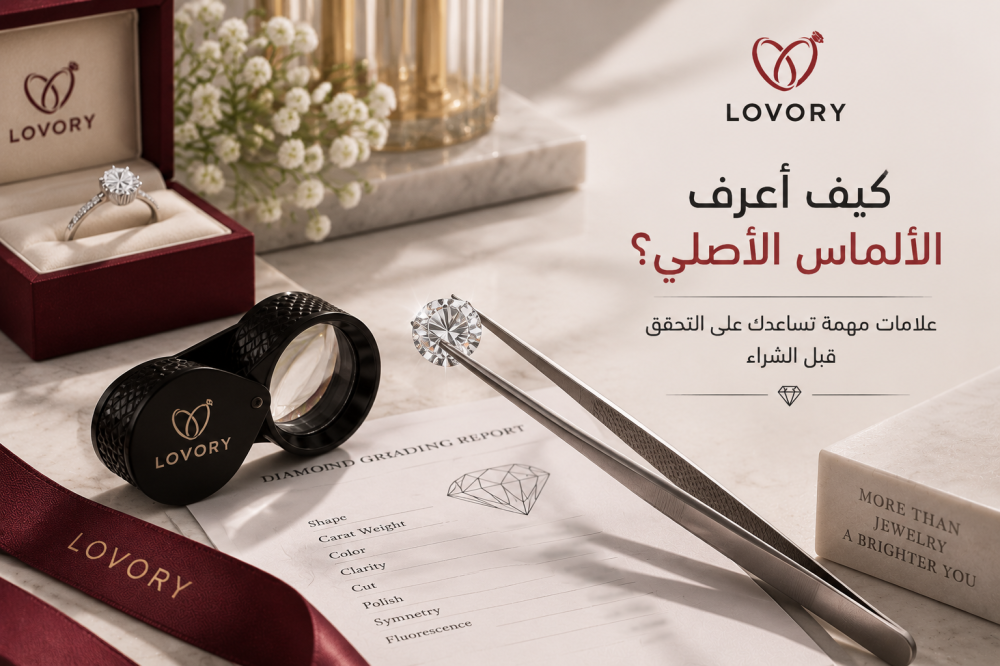
Choosing a diamond requires confidence. Learn about the signs that help you identify a genuine stone and check its specifications before buying your jewelry.
How can I tell if a diamond is genuine before buying it?
When considering buying a diamond, the question of how to identify a genuine diamond is crucial for making an informed decision, especially given the presence of other stones that may resemble diamonds in appearance. Identifying a real diamond isn't solely based on brilliance or size, but rather on a range of indicators, including the stone's characteristics, its grading method, relevant data, and, where available, a diamond certificate. Therefore, the best way to verify a diamond isn't through a single test, but by gathering multiple pieces of evidence before making a purchase decision.
Is it possible to identify a genuine diamond by its shape alone?
The sparkle might be the first thing that catches your eye when you see a stone, but it doesn't provide a definitive answer to the question of how to identify a genuine diamond , as some similar-looking stones can also appear brilliant to the naked eye. Therefore, relying solely on appearance when examining a stone is not advisable. More important details include how light reflects, the stone's characteristics, cut quality, and grading data, as well as a professional examination when precise confirmation is needed.
What are the signs of a genuine diamond that one can look out for?
There is no single visual sign that can prove that a stone is a diamond, but there are a number of indicators that can help you better evaluate the piece before buying.
The stone's luster and the way it reflects light
Diamonds possess unique optical properties that cause them to react to light in a striking way, and the quality of the cut significantly impacts the brilliance displayed. However, relying solely on brilliance can lead to inaccurate results, as some substitute stones can also exhibit strong reflections. Therefore, brilliance is an observable indicator, not the definitive test of a genuine diamond .
Announced quarantine details
It's important to review the available information about the stone rather than just looking at a picture of the product. Weight, color, clarity, cut, and other details help you form a clearer picture of what you're buying and make comparing stones more objective.
Stone certificate or report
A diamond certificate is one of the most important sources for determining a stone's specifications. A report issued by a specialist may contain detailed information that helps you understand the diamond's characteristics instead of relying solely on visual impressions.
What is the difference between a genuine diamond and a fake one?
When searching for the difference between a genuine diamond and a fake, it's essential to first distinguish between a real diamond and stones that have been designed or used to visually resemble one. Similarity in appearance does not mean that the stones are identical in composition or physical and optical properties. Some imitations may look very similar to diamonds when viewed in a piece of jewelry, so judgment by the naked eye is often insufficient. In such cases, knowing the type of stone, its characteristics, and the source of information about it becomes far more important than judging it solely by its brilliance.
How can diamonds be examined more accurately?
The method of examining a diamond varies depending on the purpose of the examination. Visual observation may reveal some details, while specialists use specialized tools and equipment to examine the stone's characteristics more precisely. Therefore, if the stone's authenticity is unclear or specific data needs to be verified, professional examination is more reliable than home testing. This point is especially important when dealing with a high-value stone, as errors in visual assessment or home testing can lead to an incorrect conclusion.
Are at-home diamond tests reliable?
When searching for how to identify a genuine diamond, you'll find numerous at-home tests involving water, steam, light, or even trying to read text through the stone. The problem is that these methods can be affected by the stone's size, cut, clarity, and how it's set in jewelry, and some substitute stones can produce similar results. Therefore, at-home tests should be considered general knowledge, not definitive proof. Furthermore, any experiment that could scratch the piece or damage the stone or surrounding metal should be avoided.
Why is a diamond certificate important before buying?
A diamond certificate or stone report helps you move from judging a stone by its appearance to reading more specific information about it. Depending on the type of report and the issuing authority, you may find data such as the stone's carat weight, color grade, clarity, cut, measurements, and other characteristics. The report's importance lies not just in having a piece of paper, but in knowing who issued it and matching their data with the presented stone. If you want to learn more about the available options, you can explore the section Diamonds in LOVORY.
How to read diamond certificate data without making a mistake?
When reading a stone report, don't focus on just one field and ignore the rest of the data. Weight, for example, tells you the stone's mass, but it alone doesn't tell you about its clarity, color, or cut quality. Also, some reports may include a unique number that can be used to verify the report's data with the issuing authority, if they offer a verification service. This step is more useful than trying to evaluate a stone from just a picture or video because it gives you specific information that can be compared to the piece's specifications.
Does the presence of a number on a diamond prove that it is genuine?
Some stones may bear a fine inscription linked to a report or identification number, but the mere presence of a number is not a rule applicable to all diamonds. Similarly, the absence of an inscription does not automatically mean the stone is fake. If a report number or inscription is associated with a stone, the most important thing is to verify and match the data using appropriate methods, rather than relying solely on the number as a definitive indicator.
What are the common mistakes made when trying to identify a genuine diamond?
Relying on shine alone
One of the most common misconceptions is that a very shiny stone must be a diamond. Luster is affected by many factors, and other stones also possess remarkable optical properties.
Considering size as evidence of authenticity
Size does not determine whether a stone is a real diamond, and a larger stone is not necessarily higher quality. Therefore, do not use size as part of a diamond test .
Relying on a single home test
Even if a widely available test gives a seemingly positive result, this does not replace a professional examination when you need reliable proof.
Ignore quarantine data
Purchasing a piece based solely on design without reviewing the stone's details reduces your ability to properly assess what you are getting and compare options.
Confusing lab-grown diamonds with imitation stones
This is one of the most important points that needs clarification. A lab-grown diamond is not simply a stone that resembles a diamond; it is a diamond produced in a laboratory environment, while diamond imitations are different materials that attempt to replicate its appearance. Therefore, the word "imitation" should not be used to describe a lab-grown diamond.
Are lab-grown diamonds real?
Yes, lab-grown diamonds are considered real diamonds in terms of their basic structure and properties; the main difference lies in their origin. This point is important when searching for how to identify a genuine diamond because the question of a stone's authenticity is different from the question of whether it is natural or lab-grown. If you want to explore this type of jewelry without turning this article into a repetitive explanation, you can visit the section Diamond Laboratories in Lovory.
How do you verify diamonds when buying jewelry online?
Buying online makes the written product information more important because you can't examine the stone yourself before ordering. Therefore, review the piece's description, stone specifications, mineral type, any available certification or report information, and the store's policies related to the product. Don't base your decision solely on the image, as lighting, photography, and screen size can alter how the stone appears.
How can I tell if a diamond is genuine when buying a ring?
When buying a diamond ring, start by reading the stone's specifications, then move on to the design details, the metal, and how the diamond is set. If the product includes information about the stone's weight, specifications, or a report, compare it to what is stated in the product description. This way, the question of how to identify a genuine diamond transforms from guessing the stone from looking at a picture to a verification process based on clear information. This knowledge can then be used to select a product that suits the desired design, rather than choosing a ring based solely on the apparent size of the diamond.
Can diamonds be examined using a mobile phone camera?
A phone camera can help you zoom in and see some external details, but it cannot confirm the stone's internal structure or prove it's a diamond. Therefore, phone photos or camera apps are not a reliable method for examining diamonds . If definitive confirmation is needed, a professional examination or report is far more trustworthy.
When do you need to have a diamond examined by a specialist?
A professional examination becomes important when the stone's information is unclear, you want to verify a stone you already own, or there are discrepancies between the piece's specifications and your expectations. It is also helpful when you need to assess characteristics that cannot be seen with the naked eye. When purchasing a product with detailed specifications from a reputable source, always begin by reading its specifications and any accompanying report.
How to confidently choose a diamond after checking the stone?
After learning how to identify a genuine diamond, don't let the selection process devolve into a search for the biggest or most brilliant stone. Start with the specifications, then consider the design and how well it suits your taste and intended use. This way, you separate two distinct phases: first, confirming the stone's authenticity, and then choosing jewelry that complements your style. For different design trends, you can visit our collection. Inspirational jewelry from LOVORY.
Frequently asked questions about identifying genuine diamonds
How can I be sure if a diamond is genuine?
The best way to get a reliable result is to rely on the stone data and its certificate when available and to have it checked by a specialist when needed, rather than relying on a single home test.
What are the most prominent signs of a genuine diamond?
Characteristics such as luster and how the stone reacts to light can be observed, but these alone are not enough to prove authenticity. A report and expert examination provide more accurate information.
What is the difference between a genuine diamond and a fake one?
Real diamonds have a specific composition and properties, while imitation or simulated stones may be different materials designed to look visually similar to them.
Is the water test for real diamonds accurate?
It is not recommended to consider it as definitive proof, as the result may be influenced by multiple factors and does not solely determine the type of stone.
Can a genuine diamond be identified by its shine?
Luster is only a visual indicator, not a reliable method, because other stones may also appear to have a strong luster.
Are lab-grown diamonds real diamonds?
Yes, lab-grown diamonds are real diamonds, and should not be confused with diamond-like stones.
Can diamonds be tested with a mobile phone?
A camera can be used to observe surface details, but it cannot prove that a stone is a diamond or accurately determine its internal properties.
How do I know if a diamond certificate is valid?
Check the report's issuing authority, report number, and the data contained therein, and use the issuing authority's official verification service if available.
What should you remember before buying diamonds?
The answer to the question of how to identify a genuine diamond doesn't depend on a quick fix or a single home test, but rather on gathering reliable information about the stone, understanding the certification, and seeking professional examination when necessary. The clearer the details of the stone, the easier it becomes to distinguish between its attractive appearance and the information that proves its authenticity. This way, you can choose diamond jewelry with greater confidence, without relying on guesswork or being dazzled by its brilliance alone.